
 Author: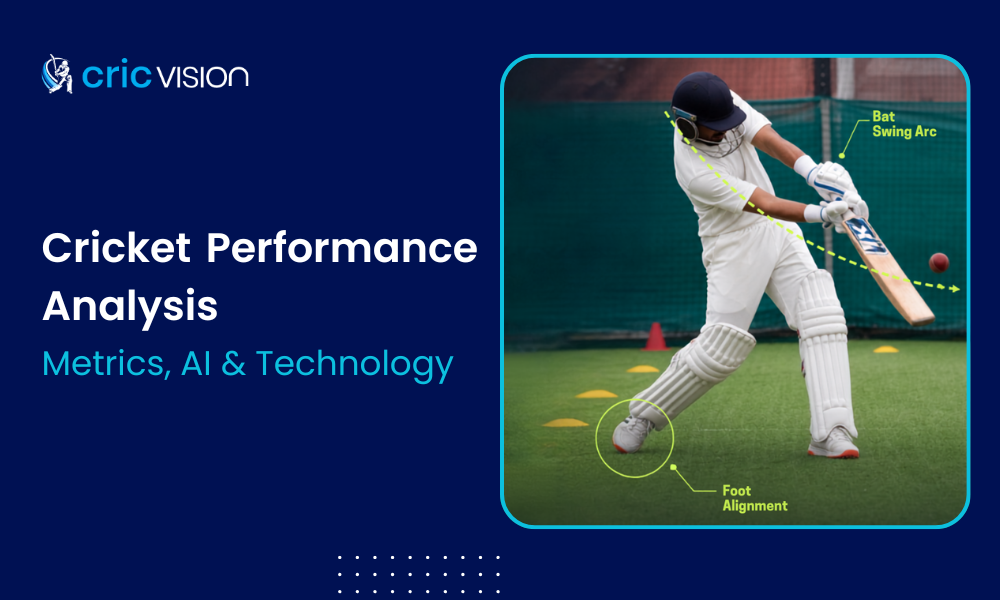
Cricket coaching has always depended on sharp observation. The difference now is that observation no longer has to stay in a coach’s memory, notebook, or post-match conversation.
Across sports, this shift is already visible. A 2026 report found that 82% of sports organizations have adopted AI, with 98% planning to increase their use in the next 12 months. This change isn’t about replacing the coach’s eye. It’s about reviewing footage, identifying gaps, and tracking player progress across matches and training environments.
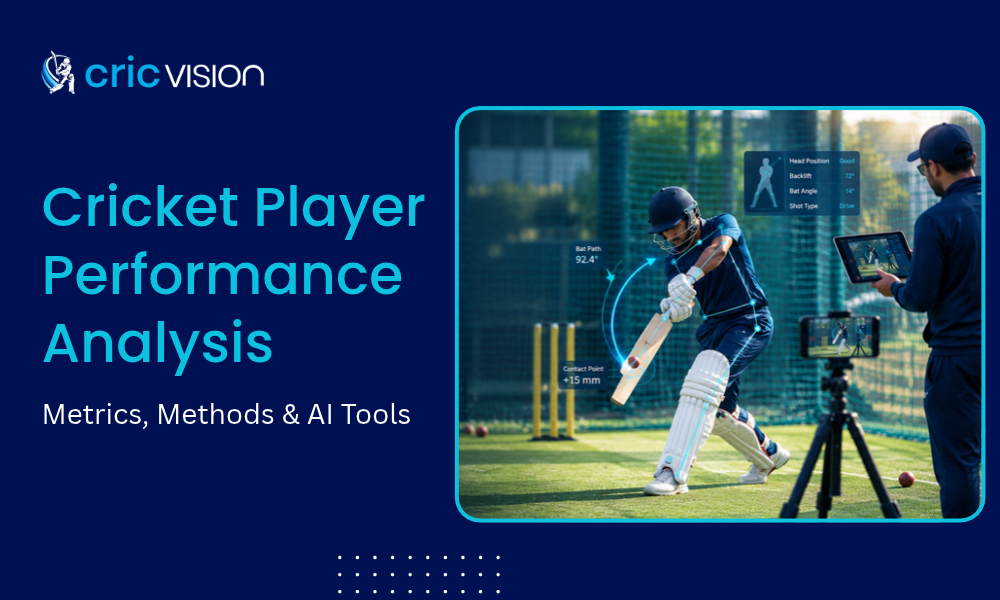
Cricket is no exception. The sport has moved from stopwatch numbers to camera-based tracking, wearable data, and AI-assisted video review. This blog breaks down the key KPIs, the technologies behind modern analysis, and how AI is being applied across match formats.
Understanding Cricket Performance Analysis
Player improvement is rarely about one number. A batter’s score does not always show whether their timing, balance, shot selection, or control is improving. A bowler’s wickets do not always show whether they are hitting the right length or maintaining rhythm. A fielder’s dropped catch may come from poor hand position, late reaction, wrong body shape, or fatigue.
This is where cricket performance analysis becomes useful. For academies and clubs managing multiple coaches and players, it studies how a player performs across batting, bowling, fielding, movement, and match situations, then uses those insights to improve training decisions.
It binds your coaches’ ground review with video, artificial intelligence (AI), detailed metrics, tracking tools, specialized hardware, and player-specific feedback.
Is it Different From Basic Scorekeeping
Yes. Scorekeeping records what happened in a session or match. It shows runs, wickets, overs, catches, strike rate, economy rate, and the final result. Performance analysis explains why those numbers happened. It examines the movement, decision-making, technique, workload, and tactical context behind the scorecard.
For example, two batters may both score 40 runs. One may have controlled most shots and rotated the strike well. The other may have survived because of mistimed shots or poor fielding. On the scorecard, both innings may look similar. In analysis, they tell very different stories.
Where Cricket Performance Analysis Fits in the Coaching Cycle
Analysis is not only a post-match review activity. If used well, it supports the full coaching cycle, including what your coaches plan post-session, what they observe during practice, and what they decide after reviewing the player’s performance across multiple cricket formats.
1. Before Training or Match Preparation
Before a session, your coaches can review past footage, player weaknesses, match-up patterns, and shot habits. This clarity helps them decide whether the next session should focus on timing, footwork, line and length, fielding movement, or recovery.
2. During Practice or Match Review
Analysis helps capture key moments such as repeated mistimed shots, poor release points, missed lengths, unstable balance, or fielding errors while the context is still fresh. These are highly relevant and easy to miss when several players are training together.
3. After the Session
After any game, your coaches can review the patterns, share clearer feedback, and assign drills based on what the player actually needs to improve. The same issue can then be tracked in the next session to see whether the correction is working or needs more attention.
Key Cricket Performance Metrics Coaches Should Track
Once analysis becomes part of your coaching cycle, the next step is knowing what to review more closely. The right key performance indicators (KPIs) help coaches see whether a player is improving with intent or just producing better outcomes by chance.
Batting Performance Metrics
- Scoring Efficiency: Covers strike rate, boundary percentage, strike rotation, and how well a batter finds runs without depending only on risky shots.
- Shot Efficiency: Looks at timing, placement, contact quality, and whether the player is producing controlled shots rather than occasional outcomes.
- Technical Consistency: Connects setup, balance, footwork, swing shape, and repeatability across similar deliveries.
- Match-up Data: Shows how a batter responds to pace, spin, angles, lengths, and conditions that expose specific scoring gaps.
Bowling Performance Metrics
- Line and Length Control: Measures whether a bowler can repeat the intended area delivery after delivery to build pressure, not just throw one good ball.
- Variation Effectiveness: Reviews how slower balls, yorkers, bouncers, cutters, seam, swing, or spin are landing in areas that trouble the batter.
- Pressure Creation: Looks beyond wickets by reading dot balls, economy, scoring restrictions, and forced mistakes.
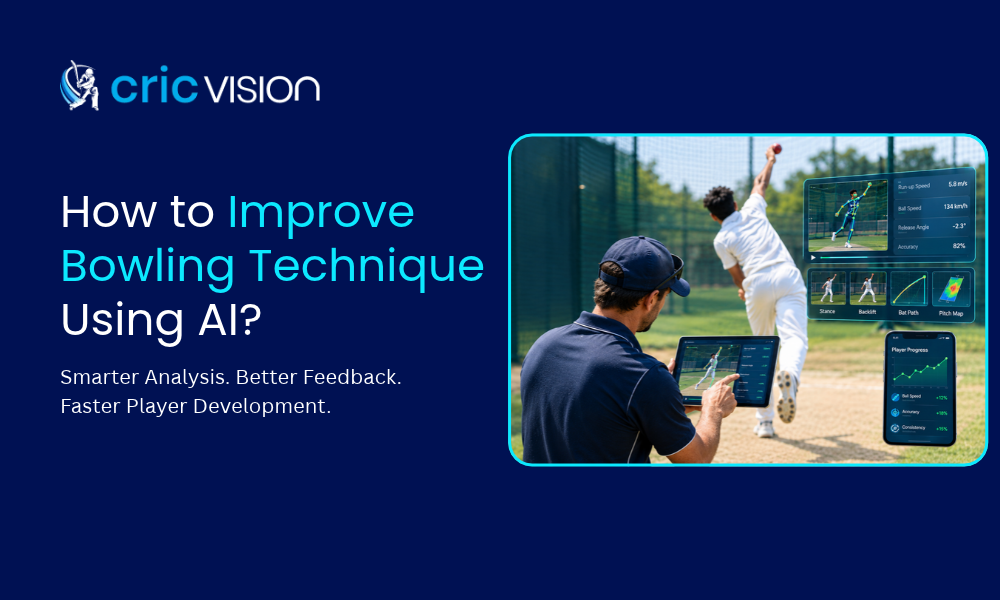
- Rhythm and Load Management: Links bowling action, pace drop, and spell intensity to how well a bowler holds their rhythm across training and match situations.
Fielding and Movement Metrics
- Fielding Efficiency: Covers catching, clean pickups, ground fielding, and how reliably basic fielding actions are completed.
- Reaction and Coverage: Reviews first movement, positioning, agility, and whether the player reaches the right area early enough.
- Throwing Accuracy: Tracks throw quality, direction, and how often a fielder creates real run-out pressure.
Fitness, Workload, and Training Metrics
- Training Load: Measures session volume, bowling workload, sprint demand, and repeated effort across practice blocks.
- Movement Intensity: Captures speed, acceleration, agility, and effort during drills or match-like scenarios.
- Recovery Readiness: Helps your coaching team judge fatigue, overtraining risk, and whether a player is ready for higher-intensity work.
Technologies and Tools Used in Cricket Performance Analysis
Cricket academies can start with video review, while advanced setups may use tracking systems, wearables, sensors, and data platforms across different cricket formats. If you’re interested in how these technologies are transforming coaching, player development, and modern cricket, read our guide on How Technology Is Changing Cricket before exploring the tools below.
1. Video Analysis Software
Video analysis software is the most accessible layer for academies and coaching teams. It helps your coaches slow down footage, compare clips, mark important moments, and review a player’s movement during batting, bowling, or fielding actions.
Cameras that capture academy matches, club games, net practice, warm-ups, and tournaments help observe what the eye misses in real time. Some advanced video platforms also connect ball-by-ball clips with player data, custom KPIs, and match context, making review more structured across players and formats.
2. AI-Based Computer Vision Tools
Computer vision tools take video review further by helping identify specific actions from footage. Instead of having your coaches manually search through long videos, these systems can identify moments, such as shots, deliveries, player movement, and ball events.
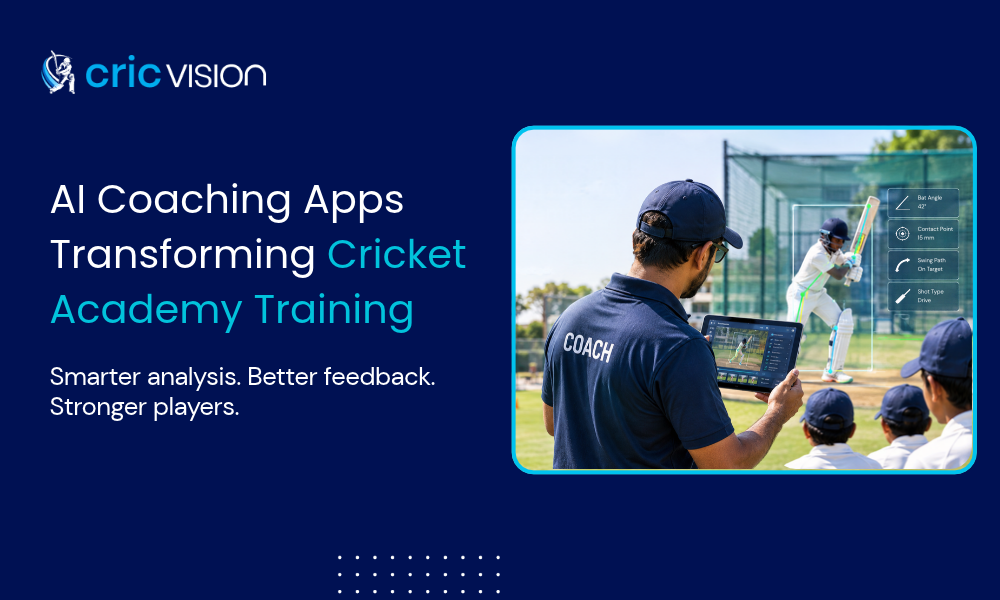
Platforms such as CricVision support AI shot analysis, auto shot detection, progress tracking, coaching tools, and structured training management. Other platforms also support reports, biomechanics, 3D trajectory, swing analysis, spin analysis, and player management.
3. Ball Tracking and Pitch Mapping Systems
Ball-tracking and pitch-mapping systems are more common in advanced cricket environments and help explain the game from the delivery point onward. Advanced ball-tracking systems are precise at identifying bowling patterns, making broadcast-level decisions, providing officiating support, and detecting edge moments.
These systems show where the ball is landing, what pattern is repeating, and how that affects the batter’s scoring options or the bowler’s plan.
4. Wearable GPS and Workload Trackers
Wearable GPS and workload trackers help understand the physical side of cricket. They are useful when players compete across formats, bowl long spells, travel for tournaments, or manage multiple matches in a short period.
These tools can monitor movement load, sprint effort, acceleration, fatigue, recovery, and bowling workload. Academies get to look beyond attendance and effort to make better decisions about readiness, intensity, and player workload.
5. Smart Bats and Sensor-Based Devices
Smart bat sensors use bat-mounted hardware to capture bat speed, impact, lift angles, swing data, power, timing, sweet-spot mapping, and related batting feedback. It can be useful when video shots alone do not explain the full batting issue.
For example, a player may look balanced on video but still be late through contact. Another may have a strong-looking swing but poor repeatability against pace or spin.
6. Performance Dashboards and Reporting Tools
Dashboards and reporting tools present analysis in a format that academies can actually use. They bring clips, match observations, player records, coaching notes, progress reports, and performance trends into one place.
This way, scattered clips, match observations, and player records become easier to manage. The best reports do not just show numbers. They help your coaches explain what changed, what still needs work, and what should be reviewed in the next game.
AI Use Cases in Cricket Performance Analysis
AI becomes useful when it helps your academy move from raw video to faster technique checks, clearer player overview, and progress tracking that your coaches can actually act on. If you want to explore real-world examples of how AI is being used in modern cricket coaching, read our guide on AI Video Analysis Use Cases before diving into the use cases below.
Use Case 1: AI Video Breakdown for Technique Review
Long cricket footage has value only when your coaches can quickly reach the moments that matter. AI video breakdown helps turn sessions into reviewable clips, so technique feedback no longer depends on memory or manual video scanning.
- Automated shot detection and video clipping help separate important batting, bowling, and fielding moments from long recordings.
- Shot classification, body movement, bat path, and ball path visibility help your coaches explain what happened before, during, and after the action.
- Instead of only saying what went wrong, coaches can show the clip, mark the moment, add annotations, and explain the correction visually.
- When multiple players, batches, or teams need attention, structured clips help your academy maintain consistent technique review without adding more manual work.
Use Case 2: AI Pattern Recognition for Player Progress
One good shot or one poor delivery does not tell the full story. Player development becomes clearer when the same actions are reviewed across different cricket formats. AI pattern recognition helps your coaching team see whether a player is improving, repeating the same issue, or developing a new weakness under different match conditions.
- Poor contact zones, missed lengths, late responses, or inconsistent bowling rhythm can be reviewed across multiple clips rather than blindly skipping the mistakes.
- A batter may struggle against a certain length, angle, or pace. Pattern-based review helps eliminate skill issues before they become long-term habits.
- Instead of relying solely on runs, wickets, or attendance, your academy can assess whether the player’s technique and execution are actually improving over time.
- When the same issue appears repeatedly, coaches can assign a focused drill and later check whether that correction is showing up in real cricket actions.
Turn Performance Analysis Into Better Training Decisions
Cricket performance analysis is only useful when it changes what happens next. A clip, metric, or AI-generated report holds little value unless it helps your coaches decide what to correct, which drill to assign, and how to track the same player in the next game.
The real benefit comes from moving from general feedback to specific patterns, and from one-time reviews to a clear record of progress. A batter’s scoring issue, or a bowler’s rhythm problem, gets connected to the right correction instead of staying a vague performance gap.
CricVision brings that structure into everyday coaching with AI video review, player progress tracking, coach annotations, and performance reports built around real cricket actions.
Turn cricket footage into clearer coaching insights with CricVision. Contact us today.
FAQs
How does video analysis help improve cricket training?
It lets coaches replay technique, review deliveries frame by frame, and spot patterns invisible in real time, turning general feedback into specific, correctable actions for each player.
Can cricket video analysis work with regular phone footage?
Yes, basic phone footage supports technique review and pattern spotting, though tracking tools and specialized cameras improve accuracy for detailed metrics across the cricket game.
How accurate is AI cricket video analysis, and where does a coach still need to step in?
AI reliably tracks measurable data such as speed, timing, and positioning, but interpreting intent, mindset, and match context still requires a coach’s judgment, experience, and player context.
What can AI detect from cricket training or match videos?
AI can detect shot timing, footwork patterns, bowling release points, field positioning, and repeated technical errors, helping coaches spot issues that are easy to miss live.
How can analysis help coaches plan better drills?
By showing exactly what needs correction, whether footwork or ball release, analysis lets coaches assign targeted drills instead of general practice repeated without a clear purpose.