
 Author:
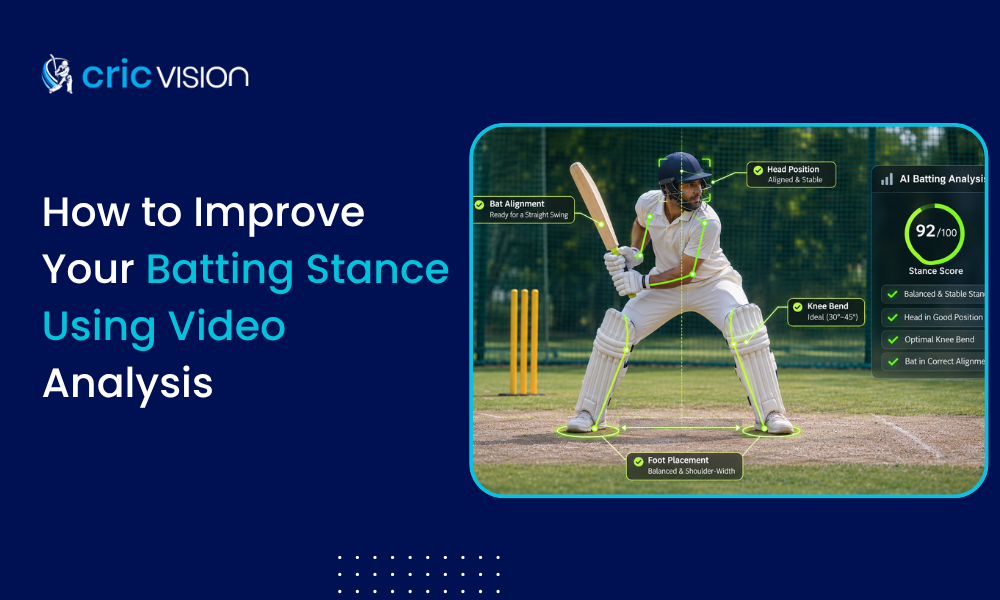
A good batting stance is the foundation of a consistent batting technique in cricket. Your foot placement, head position, body balance, and bat preparation all influence how comfortably you respond to a delivery. Even small positioning mistakes can affect your timing, footwork, and shot execution.
Many cricketers practice regularly but struggle with losing balance, playing late shots, or adjusting to different deliveries. Sometimes, these problems begin with their initial batting stance.
This is where video analysis can help. By recording and reviewing batting movements, players and coaches can identify technical issues that may be difficult to notice during live practice. They can examine specific movements, understand repeated mistakes, and make corrections based on actual footage.
In this guide, we will explore how to improve your batting stance using video analysis, common mistakes to avoid, practical drills, and how AI-powered cricket analysis can support better batting practice.
Why Is Your Batting Stance Important in Cricket?
Your batting stance is the position you take before facing a delivery. It prepares your body to move, maintain balance, control the bat, and respond to different types of bowling.
Every cricketer has a different playing style and body structure, so there is no single stance that works perfectly for everyone. However, certain fundamentals help players develop a comfortable and consistent starting position. Coaches can use video analysis to review these fundamentals, identify technical mistakes, and provide more accurate feedback. Understanding the difference between AI cricket video analysis and manual review can also help coaches choose the right approach for evaluating batting techniques.
1. Maintains Balance and Stability
Balance allows batters to move in different directions without losing control. An excessively wide or narrow stance can affect stability and make weight transfer difficult.
A comfortable stance provides a stable base for playing both front-foot and back-foot shots.
2. Supports Better Footwork and Bat Control
Your foot position influences how easily you can move towards the ball. A balanced starting position helps you prepare for different deliveries and control your bat more comfortably.
3. Helps You Respond to Different Deliveries
Batters need to adjust to different lines, lengths, and speeds. A comfortable stance allows you to move forward or backward without unnecessary body adjustments.
4. Develops a Consistent Starting Position
Repeating a comfortable stance before each delivery helps players build a reliable batting routine. It also makes technical improvements easier to review across practice sessions.
What Does a Good Batting Stance Look Like?
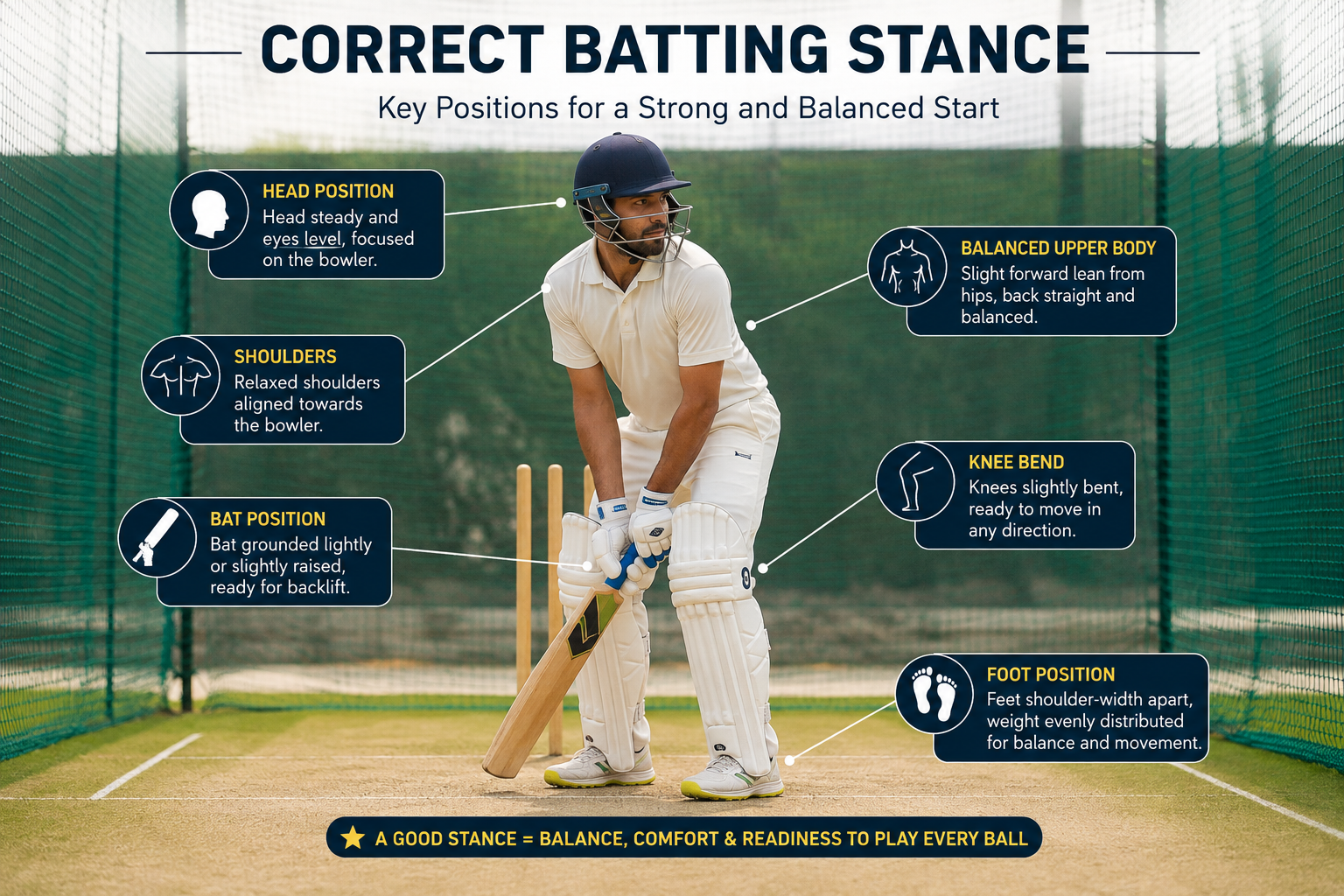
A good batting stance should feel natural and allow you to move freely. Professional players may use different setups, but beginners and developing cricketers can focus on these five fundamentals.
1. Comfortable Foot Placement
Your feet should provide a stable base without restricting movement. Standing too wide may limit forward movement, while standing too narrowly can affect balance.
Find a comfortable position that allows you to move naturally in both directions.
2. Balanced Head and Body Position
Keep your head in a comfortable position and your eyes focused towards the bowler. Avoid excessive leaning or tilting, as it can affect your balance and body alignment.
3. Slightly Bent Knees
Keep your knees slightly bent rather than locking them. This helps you remain ready to move and transfer your weight during different shots.
4. Comfortable Bat Position and Grip
Hold the bat comfortably without creating unnecessary tension in your hands. Your initial bat position should allow you to prepare for the backlift naturally.
5. Relaxed Shoulders
Keep your shoulders and upper body relaxed. Excessive tension can restrict movement and make shot preparation uncomfortable.
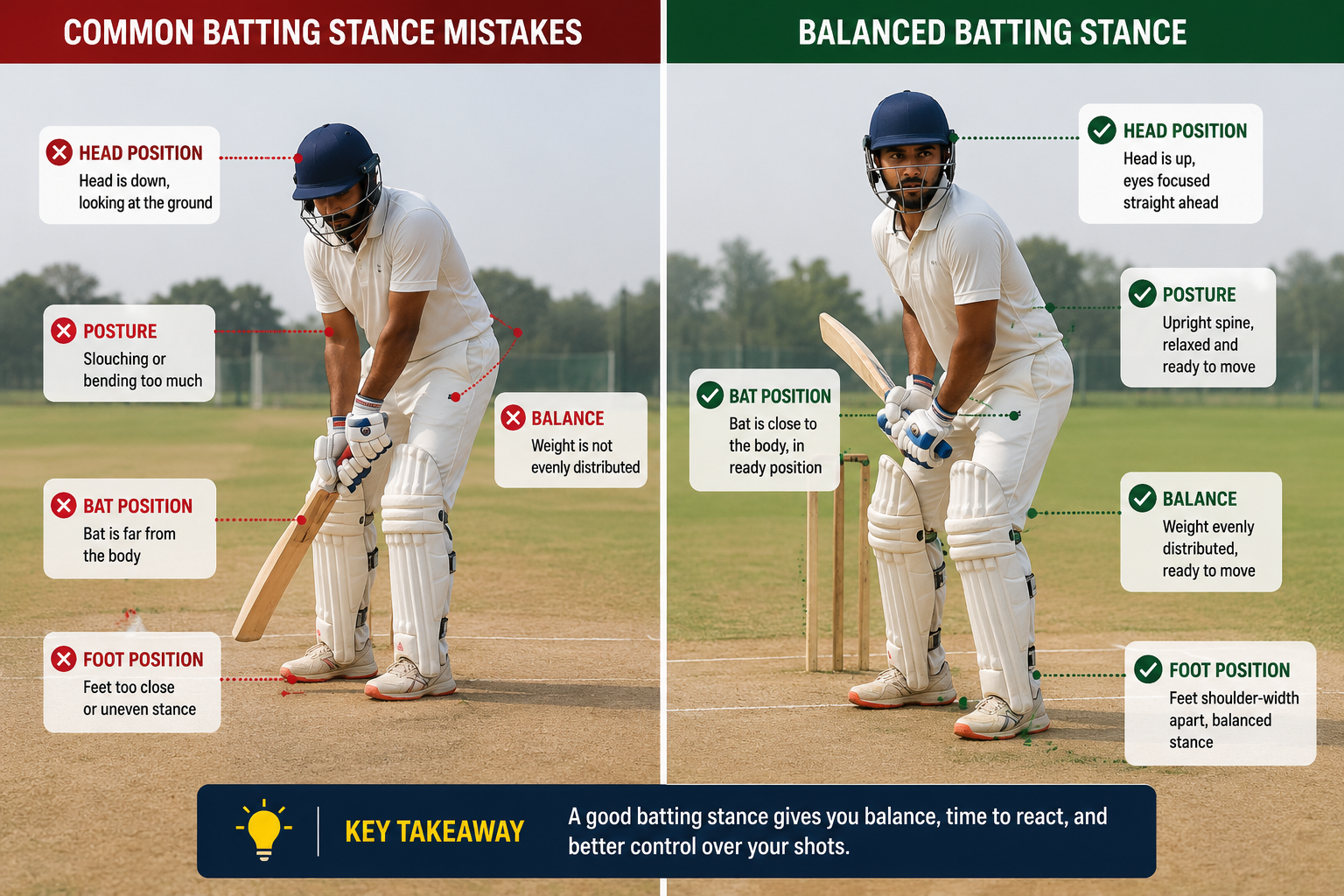
6 Common Batting Stance Mistakes That Can Affect Your Performance
Players often focus on improving their shots without checking whether their starting position is creating problems. Identifying repeated mistakes can help them understand which areas need attention.
1. Standing Too Wide or Too Narrow
An unsuitable stance width can affect stability and movement. A wide stance may restrict forward movement, while a narrow stance may make it harder to maintain balance.
How to improve: Record your stance from the front and observe the distance between your feet. Work with your coach to find a comfortable position.
2. Leaning Too Far Forward or Backward
Excessive leaning can affect body balance and make weight transfer less comfortable when playing shots.
How to improve: Review your side-view footage and observe whether your upper body remains balanced before the delivery.
3. Unbalanced Weight Distribution
Placing too much weight on one foot can make it difficult to move in the opposite direction. This may affect your response to different lengths.
How to improve: Practice controlled forward and backward movements while maintaining a stable head position.
4. Incorrect Head Position
Your head plays an important role in balance and visual tracking. Excessive head movement may affect your ability to stay balanced during shot preparation.
How to improve: Review your head position in slow-motion footage, especially during the initial setup and early movement towards the ball.
5. Uncomfortable Bat Position
An uncomfortable bat angle can make the transition into the backlift feel unnatural and affect shot preparation.
How to improve: Record your setup and check whether your bat position allows a relaxed and repeatable backlift.
6. Changing Your Stance Unnecessarily
Frequently changing your foot position or body alignment without a clear reason can make your preparation inconsistent.
How to improve: Develop a comfortable pre-delivery routine and review whether your starting position remains consistent across multiple deliveries.
How Video Analysis Helps Improve Your Batting Stance
Watching your own batting footage gives you an opportunity to review your technique outside the pressure of facing a live delivery.
Instead of relying only on memory, you can examine specific movements and discuss them with your coach.
Here are six ways video analysis can support batting stance improvement.
1. Identifies Foot Placement and Alignment Issues
A front-view recording helps coaches observe the distance between the feet, body alignment, and overall starting position.
Players can review whether their feet remain comfortable and whether their stance allows movement in both directions.
2. Helps Review Head Position and Body Balance
Side-view footage can help identify excessive leaning, changes in head position, and balance issues.
Coaches can pause the recording at different moments to explain how body positioning affects movement.
3. Reveals Weight Transfer Patterns
Video footage helps coaches review how a batter transfers weight from the initial stance into front-foot and back-foot shots.
By examining multiple deliveries, they can identify repeated movement patterns rather than making conclusions from a single shot.
4. Examines Bat Position and Backlift
Reviewing the bat position before the delivery and during the backlift helps players understand whether their preparation is comfortable and consistent.
5. Allows Comparison Across Multiple Deliveries
A batter may maintain a good stance against one delivery but lose balance against another. Reviewing several balls helps identify situations where the problem occurs more frequently.
6. Tracks Improvements Between Practice Sessions
Recording practice sessions regularly creates a visual record of technique. Coaches and players can compare earlier and recent footage to see whether a correction is becoming consistent.
How to Analyze Your Batting Stance Using Video: A Step-by-Step Guide
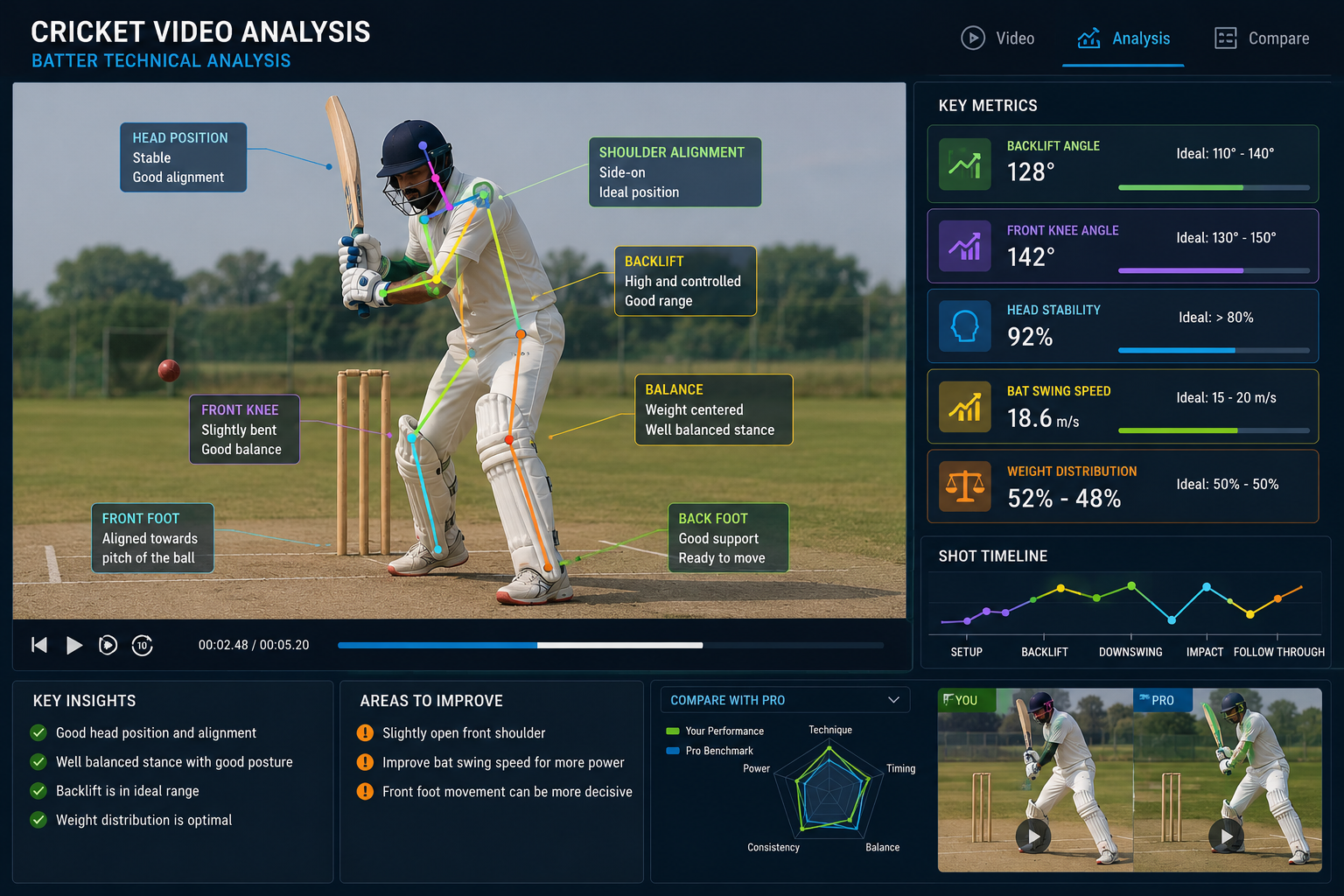
You do not need an expensive recording setup to start reviewing your batting stance. A smartphone, a stable camera position, and a structured review process can help you understand your technique.
Follow these seven steps during your next practice session.
Step 1: Record Your Batting Stance from Multiple Angles
Start by recording yourself from the front and side. Make sure your full body, feet, and bat are visible.
Use a stable camera position and maintain consistent recording angles when comparing different sessions.
Step 2: Check Your Foot Placement
Watch the front-view recording and observe your stance width and foot alignment.
Ask yourself:
- Are my feet positioned comfortably?
- Can I move forward and backward without losing balance?
- Does my stance remain consistent before each delivery?
Step 3: Review Your Head and Body Alignment
Use the side-view recording to observe your head position, upper-body posture, and knee bend.
Check whether you are leaning excessively or maintaining a comfortable position before the delivery.
Step 4: Analyze Your Weight Distribution
Review how your body moves when preparing for front-foot and back-foot shots.
Observe whether your weight transfer looks controlled or whether you lose balance during the movement.
Step 5: Examine Your Bat Position and Backlift
Pause the footage before the delivery and observe your initial bat position. Then review how the bat moves into the backlift.
Check whether the movement looks natural and whether your grip and shoulders remain relaxed.
Step 6: Identify Repeated Technical Mistakes
Avoid focusing on every small movement at once. Look for patterns that appear across multiple deliveries.
For example, if your head repeatedly moves away from the line of the ball, discuss that pattern with your coach.
Step 7: Make Corrections and Record Another Session
Choose one or two priority areas for improvement. Practice the suggested corrections and record another session under similar conditions.
Compare the new footage with your earlier recording to see whether your movement has become more consistent.
5 Effective Drills to Improve Your Batting Stance
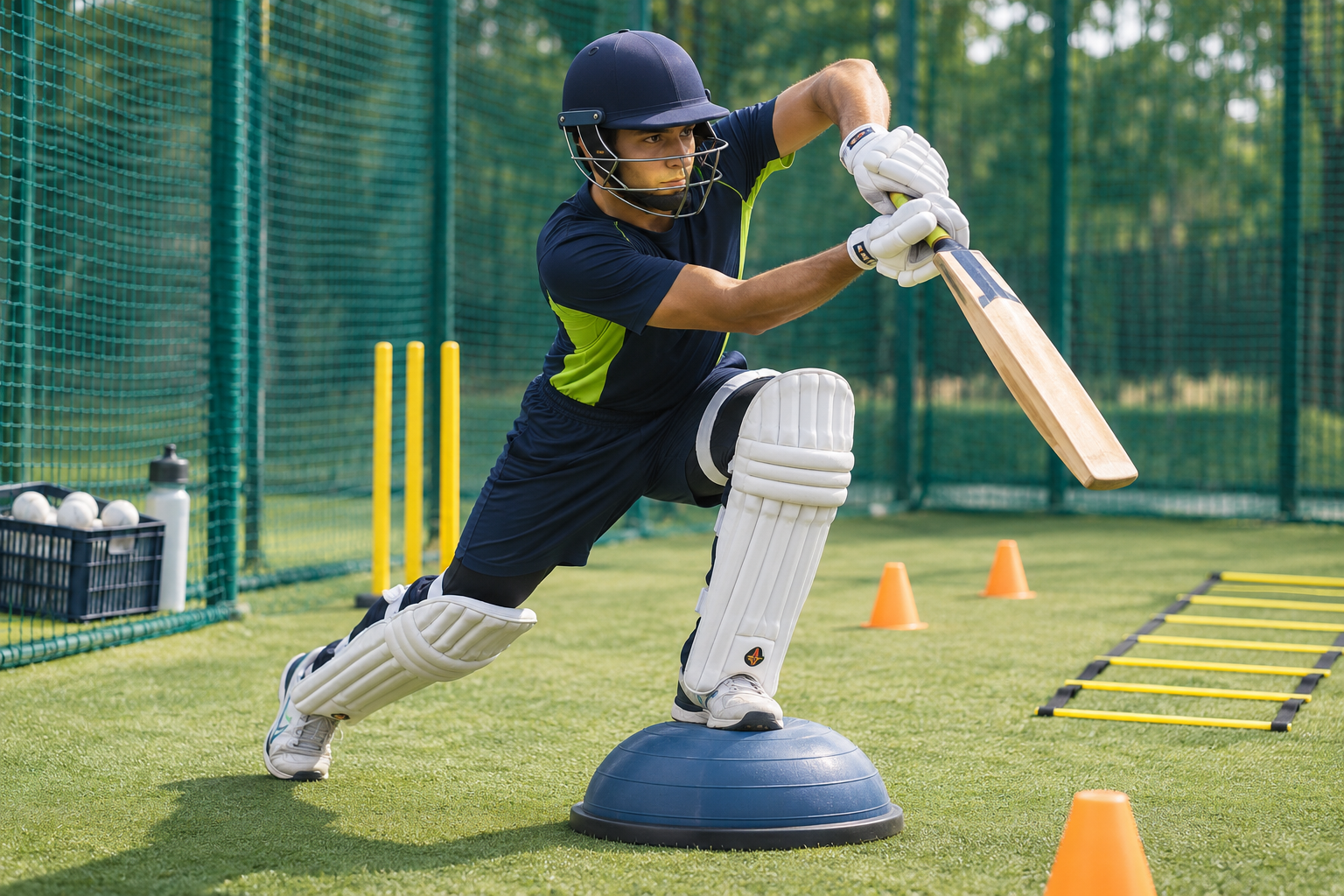
Video review helps identify technical issues, but improvement comes from consistent practice. These drills can help players work on their stance, balance, and body positioning.
1. Mirror Stance Practice
Stand in front of a mirror and take your normal batting stance.
Observe your foot placement, head position, shoulder alignment, and bat position. Repeat the setup until you can comfortably reproduce a balanced starting position.
Focus: Stance consistency and body alignment.
2. Shadow Batting Drill
Take your normal stance and practice moving into different batting positions without a ball.
Practice front-foot and back-foot movements while maintaining balance and control.
Focus: Movement from the initial stance into shot preparation.
3. Foot Placement Alignment Drill
Use simple markers to identify your preferred foot positions during practice.
Repeat your batting setup and check whether your feet return to a similar position before each delivery.
Focus: Consistent foot placement.
4. Balance and Weight Transfer Drill
Start in your batting stance and practice controlled forward and backward movements.
Avoid rushing the movement. Focus on maintaining balance and keeping your head stable while transferring weight.
Focus: Body balance and controlled movement.
5. Video Recording and Correction Drill
Record a short batting practice session. Review your stance, identify one technical issue, and practice correcting it.
Record the same drill again and compare the footage.
Focus: Connecting visual feedback with practical improvement.
How AI-Powered Cricket Video Analysis Supports Better Batting Technique
Traditional video recording allows players to watch their technique again. AI-powered cricket video analysis takes this process further by using computer vision and automated analysis tools to help coaches examine specific movements.
Depending on the platform and recording quality, these tools can support different aspects of batting analysis.
1. AI-Assisted Batting Stance Review
Video analysis can help coaches review a player’s starting position, including body alignment and foot placement.
This makes it easier to discuss positioning issues using actual footage instead of relying only on verbal instructions.
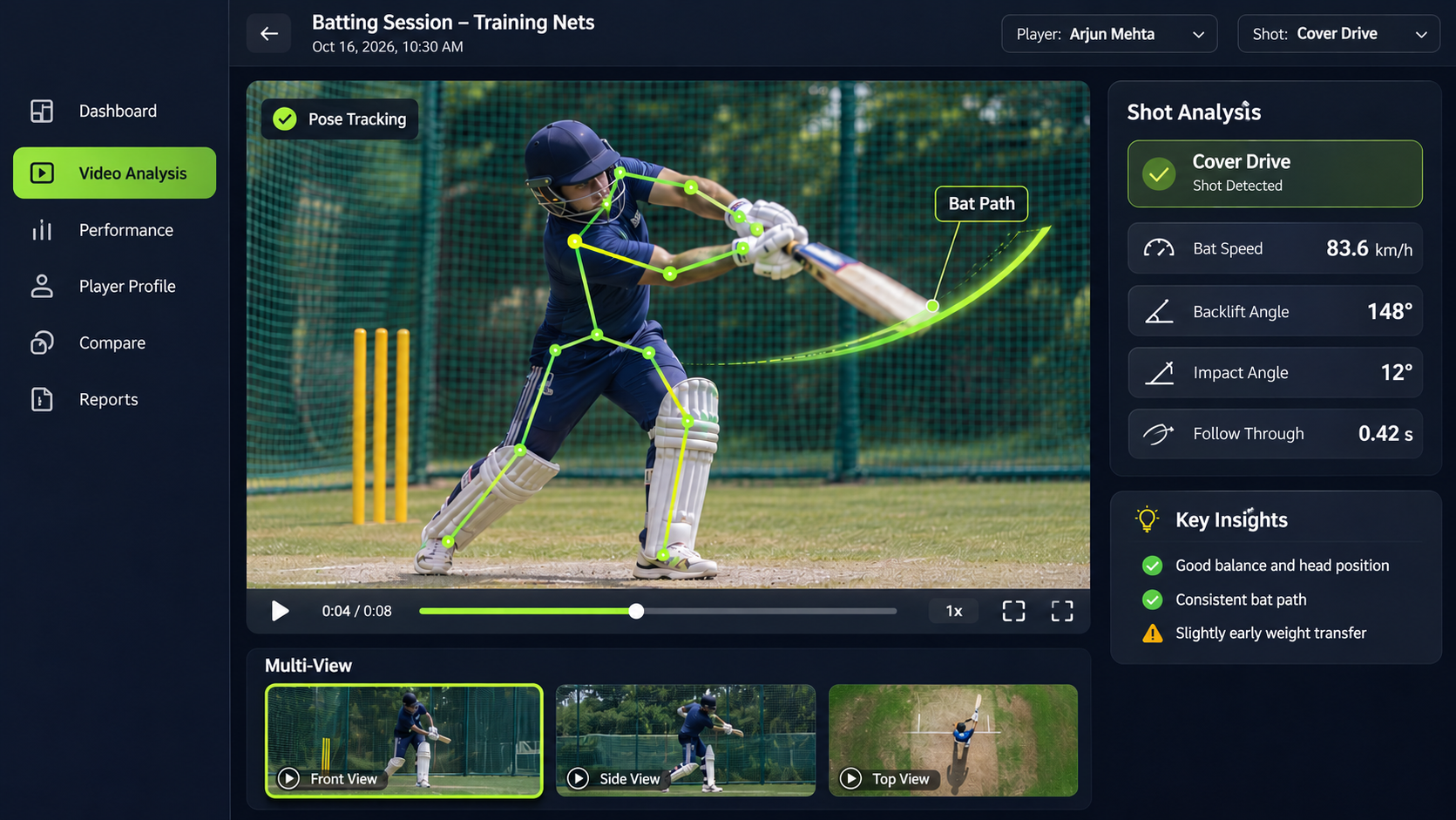
2. Skeleton Tracking for Movement Review
Skeleton tracking displays body-joint positions over recorded footage. Coaches can use these visual references to review posture, movement, and alignment during different stages of batting.
It can help explain how the head, shoulders, hips, and legs move as the batter prepares for a shot.
3. Backlift and Bat Path Analysis
A player’s stance influences the preparation that follows. Reviewing backlift and bat path can help coaches understand whether the initial setup supports comfortable batting movement.
4. Multi-Angle Video Comparison
Front and side views provide different perspectives of a player’s technique. Reviewing multiple angles helps coaches understand movements that may not be clearly visible from a single camera position.
5. Video Feedback and Performance Reports
Video annotations, selected clips, and reports can make feedback easier to understand. Players can revisit specific movements and remember what they need to work on during their next practice session.
6. Tracking Technical Improvements Over Time
Comparing recordings from different sessions helps coaches observe whether a technical adjustment is becoming consistent.
AI-generated insights should still be reviewed in context. Camera positioning, lighting, movement visibility, and recording quality can influence the analysis. A qualified coach should interpret the findings before deciding on technical corrections.
Improve Your Batting Technique with CricVision
Improving a batting stance requires more than simply watching a player bat. Players and coaches need to understand how body positioning, footwork, backlift, and movement work together during a delivery.
CricVision is an AI-powered cricket coaching and performance analysis platform designed to help players, coaches, and cricket academies review training footage and understand batting performance.
Its video analysis capabilities include:
- Batting stance analysis: Review starting positions and body alignment.
- Skeleton video: Examine visible body movement and positioning.
- Bat path analysis: Review bat movement during batting practice.
- Ball tracking: Support the review of ball movement and batting performance.
- Multi-view video analysis: Compare footage from different camera perspectives.
- Video reports and annotations: Make technical feedback easier to communicate and revisit.
For cricket academies, these capabilities can support a more structured training process by making recorded footage easier to organize, review, and discuss.
Whether you are a developing cricketer working on your batting setup or a coach helping players improve their technique, video-based feedback can make practice more focused.
Ready to bring smarter video analysis into your cricket training?
Explore CricVision and discover how AI-powered cricket analysis can support your coaching and player development process.
Frequently Asked Questions
1. How can I improve my batting stance in cricket?
You can improve your batting stance by focusing on foot placement, head position, body balance, knee bend, and bat preparation. Record your batting practice, review your movements, and work with a coach to correct repeated technical mistakes.
2. What is the correct batting stance for beginners?
Beginners should start with a comfortable and balanced stance that allows free movement. The feet should provide a stable base, the head should remain balanced, and the bat should be held comfortably. The exact position can vary depending on the player’s body structure and playing style.
3. How can video analysis help improve batting technique?
Video analysis allows players and coaches to review batting movements, identify repeated mistakes, and compare technique across practice sessions. Slow-motion playback and multiple camera angles can make certain movements easier to understand.
4. Which camera angle is best for batting stance analysis?
Front and side camera angles are useful for reviewing different aspects of batting stance. A front view helps observe foot placement and body alignment, while a side view helps review posture, head position, and bat preparation.
5. How often should I review my batting stance?
Players can review their batting stance regularly during practice sessions, especially when working on a specific technical correction. Comparing footage over multiple sessions can help coaches understand whether the adjustment is becoming consistent.