
 Author:
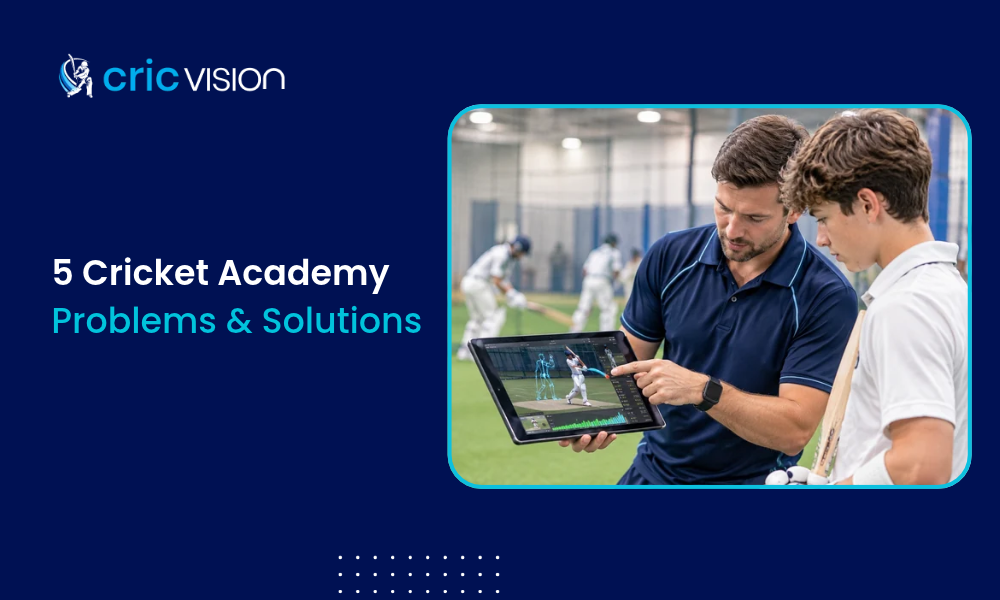
A cricket academy coach has just finished a training session with a group of 20 players. The session went well, but the real work is not over. There are batting videos to review, technical corrections to document, drills to assign, and progress to compare with previous sessions.
One batter needs to work on his backlift, another is struggling with balance at impact, while a third player has made noticeable progress but needs a closer comparison with footage from several weeks earlier. Before the coach can finish reviewing everything, a parent asks a familiar question: “How is my child progressing?”
The coach probably knows the answer. The difficulty is having the time and information needed to give a detailed answer.
This becomes increasingly difficult as cricket academies work with larger groups of players and more frequent training sessions.
The International Cricket Council reports more than 1.5 million cricket participants outside the Full Member nations, while the England and Wales Cricket Board reported 43,454 recreational cricket teams and around 1.2 million participants in its 2025 figures.
As participation grows, coaches have more opportunities to develop players, but they also have more footage, feedback, performance information, and communication to manage.
For academy owners, head coaches, high-performance coaches, and junior coaches, the challenge is therefore not simply providing more training. It is building a player-development process that allows coaches to give meaningful feedback consistently, understand how players are progressing, and communicate that progress clearly. This is where cricket training technology, AI video analysis, performance data, and digital coaching tools can provide practical support.
1. Manual Video Review Takes Too Much Coaching Time
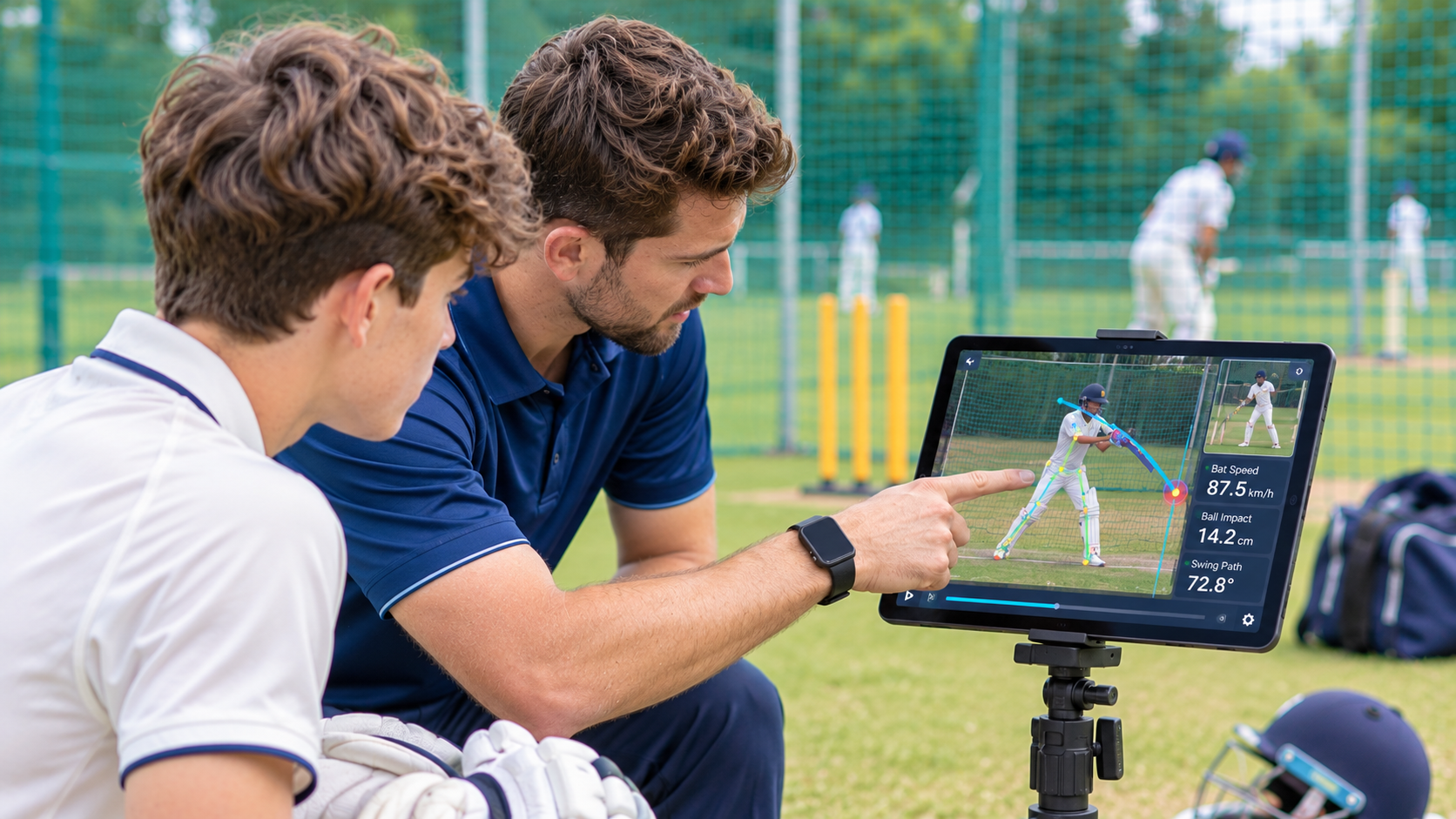
Video has become an important part of modern cricket coaching training because it allows coaches to see details that can be difficult to identify in real time. A coach can review a batter from multiple angles, examine the player’s stance and backlift, slow down the moment of impact, and compare movements from different sessions.
For individual coaching, this can provide valuable visual evidence that supports the coach’s observations.
The problem appears when the same process has to be repeated across a large group of players. A session with 20 players can generate dozens of clips, and every clip potentially contains information that could be useful for player development.
Someone still has to locate the relevant footage, review it carefully, identify technical issues, make notes, and decide what feedback should be given. If the coach is responsible for doing all of this manually, video analysis can become a significant workload outside the actual coaching session.
Research also shows why feedback and video-based learning are worth investing in, while highlighting the need for effective implementation. A systematic review of augmented feedback in cricket identified 8,262 records but only 11 studies that met its inclusion criteria.
The review found promising evidence around feedback interventions but also noted that the research base remains limited. This suggests that technology should not be treated as a replacement for coaching expertise; its value comes from how effectively it supports the coaching process.
How AI Video Analysis Can Help
AI-assisted video analysis can reduce some of the repetitive work involved in reviewing player footage. For coaches who want to understand the differences between traditional manual review and AI-assisted methods, our guide to Manual Video Review vs AI Cricket Analysis explains how both approaches compare and where AI can support the coaching process.
Instead of asking a coach to manually examine every part of every clip, cricket analysis software can help identify and organize specific performance elements that are relevant to the coaching process.
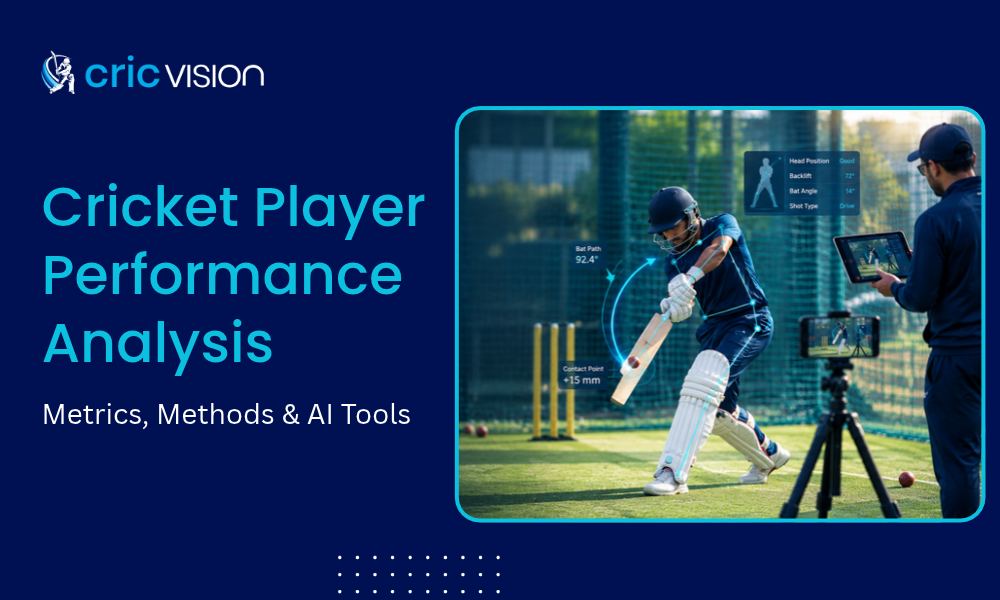
Depending on the technology, this may include bat path, ball path, stance, skeleton movement, ball-by-ball segmentation, impact frames, bat speed, ball speed, timing efficiency, shot data, and pitch location.
This does not mean the technology should decide what a player needs to do next. The coach remains responsible for interpreting the analysis and putting it into the context of the player’s experience, goals, and current training plan.
The benefit is that the coach can spend less time searching through footage and more time using the information to make better coaching decisions.
For an academy managing multiple players, that difference can be significant. The objective is not simply to analyze more video. It is to make useful video analysis practical enough to become part of the normal coaching workflow.
2. Feedback Becomes Inconsistent When Coaches Manage Multiple Players
A coach may have a clear idea of the standard of feedback they want every player to receive. In practice, maintaining that standard becomes difficult when one coach is responsible for a large group. During a busy session, one player may receive several minutes of detailed technical feedback while another receives a quick correction because the coach needs to move on to the next player. A third player may not receive a detailed explanation until the following session.
This is not necessarily a coaching-quality problem. It is often a capacity problem. The coach has a limited amount of attention, while every player has different technical needs and different rates of development. As the number of players increases, relying entirely on memory and informal verbal feedback makes it harder to maintain consistency.
Research into coaching feedback demonstrates how complex these interactions can become. A recent study examining coaching footage developed a framework covering 18 different feedback types across 600 minutes of coaching, illustrating the variety of information coaches communicate during real training environments. The more players a coach manages, the harder it becomes to consistently capture and revisit all of those observations.
Digital coaching tools can help by giving coaches a structured way to record feedback while the relevant video is still available. A technical observation can be connected to a specific clip, followed by a written or voice explanation and a recommended drill. The player can then return to that feedback instead of relying entirely on memory.
This creates a more repeatable development cycle: the coach observes the player, explains the issue, provides a practical next step, and reviews the result in a future session. The technology does not make coaching less personal. It helps preserve the coach’s observations so they remain useful after the session has ended.
3. Coaches Have Limited Visibility Into Long-Term Player Progress
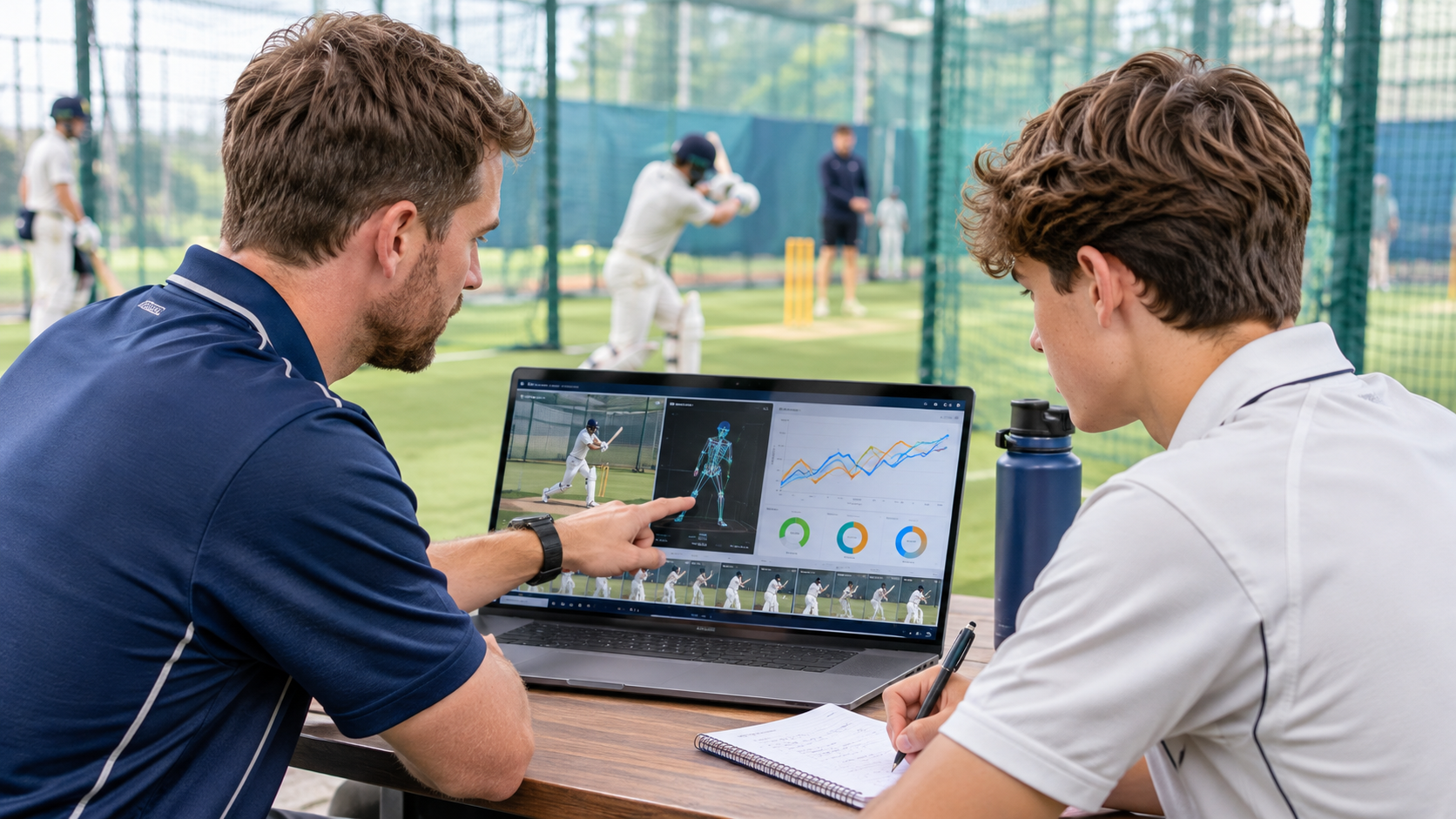
One of the most difficult questions in cricket development is also one of the most important: Is the player actually getting better?
A player may look noticeably improved during one session, but meaningful development takes place over weeks, months, and sometimes years. Without organized historical information, coaches can find themselves relying heavily on memory when trying to determine whether a technical change has actually lasted.
Video provides the raw material for comparison, but simply having more video does not solve the problem. Coaches need to be able to connect today’s performance with previous sessions, previous feedback, and the drills that were assigned along the way. Otherwise, a folder containing hundreds of clips becomes another information-management problem.
A better approach is to treat player development as a continuous story. A batter may initially show an inconsistent bat path, receive specific coaching feedback, complete a targeted drill, and then demonstrate improved contact position several sessions later. The coach can then decide whether the original issue has been resolved or whether the player needs another development priority.
This is where performance dashboards and connected player-development records become useful. They allow coaches to look beyond a single training session and identify patterns across time. Instead of asking only what happened today, the coach can ask what has changed, whether the intervention worked, and what should happen next.
CricVision brings these elements into a connected coaching workflow, combining AI video analysis with player progress information, reports, personalized drills, and performance data such as bat path, ball path, pitch maps, stance, skeleton movement, impact frames, timing efficiency, and shot data.
The value is not simply having more metrics. It is giving coaches a clearer way to understand player development and use that information when planning the next stage of training.
4. Feedback Does Not Always Translate Into the Next Training Session
There is an important difference between telling a player what is wrong and helping the player understand what to do next. A coach may identify that a batter’s head is moving away from the ball, but the player still needs a practical way to address that issue during training.
Without a clear drill or practice objective, useful feedback can become something the player remembers briefly rather than something that changes their technique.
This is particularly important in junior cricket, where players may need feedback explained in simple, actionable terms. A technical observation is only valuable if the player can connect it to a movement, drill, or practice objective. The next training session should ideally provide an opportunity to see whether the player has been able to apply the correction.
Technology can support this process by connecting video observations with personalized training activities. Instead of storing a technical comment separately from the player’s training plan, the coach can use the analysis to determine what the player should practice and then review the result in a later session.
This creates a continuous feedback loop between analysis and training. The coach identifies an issue from video, explains why it matters, assigns an appropriate drill, and then uses subsequent footage to determine whether the player’s movement has changed.
For coaches managing multiple players, this approach can make individualized development more manageable because each player can have a clear set of priorities rather than receiving the same generic training advice.
The important point is that cricket training tools should connect information with action. A platform that only produces analysis may tell a coach what happened. A useful coaching workflow should also help answer what the player should do about it.
5. Communication Between Coaches, Players, and Parents Is Fragmented
Player development also depends on communication outside the training session. This is particularly true in junior cricket, where parents play an important role in supporting attendance, practice, motivation, and long-term development.
Parents naturally want to understand what their child is working on, where they are improving, and what areas still require attention.
The problem is that this information is often distributed across different conversations and channels. A coach may provide verbal feedback after training, a player may remember only part of it, and a parent may ask about progress several weeks later.
The coach then has to reconstruct the player’s development history from memory, old videos, notes, and messages. The result can be a communication process that takes additional time while still failing to provide a complete picture.
Digital coaching platforms can create a shared development record instead. Coaches can maintain reports and feedback, players can access assigned drills and previous reports, and parents can view information shared by the coach and communicate with the coaching team. This makes the player’s development easier to follow without requiring the coach to repeat the same explanation every time someone asks for an update.
The difference is subtle but important. Instead of a parent asking, “How is my child doing?” and receiving a general verbal response, the coach can explain what was identified, what the player has been working on, what has changed, and what the next focus will be.
That creates greater transparency for parents while giving players a clearer sense of responsibility for their own development.
For an academy, better communication is therefore not about sending more messages. It is about making the right information available to the right people at the right stage of the player’s development.
Why This Matters as Cricket Academies Grow
The need for more efficient coaching processes becomes clearer as participation and competition continue to expand. The ECB reported 249,000 club cricket fixtures scheduled in 2025, compared with 240,000 in 2024 and 205,000 in 2022. It also reported growth among under-16 players, placing additional importance on structured development environments for younger cricketers.
More players and more playing opportunities naturally create more coaching interactions. For academy owners and head coaches, the challenge is therefore not simply how to attract players, but how to maintain the quality of player development as the number of players increases.
This is where the difference between collecting data and using data becomes important. A 2026 paper on sports analytics discusses the analytics-practice gap, describing the difficulty of translating increasingly sophisticated performance data into practical coaching decisions. The research argues for a more decision-focused approach in which data is connected to context, usability, and specific coaching actions.
That principle is particularly relevant to cricket academies. A dashboard does not become valuable simply because it contains more numbers, and an AI video system does not become useful simply because it can identify technical movements.
The real value comes when the information helps a coach understand what happened, why it happened, what the player should work on, and whether that intervention produced a meaningful change.
For academy leaders, this should be the standard for evaluating cricket training technology. The question should not be, “How much AI does this platform use?” but rather, “Does this help my coaches make better decisions and give my players better development support?”
AI Should Support the Coach, Not Replace the Coach
There is a temptation to describe AI as the next cricket coach. That framing misses the most practical opportunity.
Cricket coaching depends heavily on context. A coach understands the player’s age, experience, confidence, physical development, training history, goals, and individual circumstances.
A video-analysis system can identify movement patterns and performance information, but it does not have the same understanding of the player sitting in front of the coach.
The strongest use of AI is therefore not AI replacing coaching expertise. It is AI supporting that expertise. Video can provide evidence, performance data can reveal trends, and digital tools can organize feedback and drills.
The coach then applies experience and judgment to determine what matters and what the player should do next.
That approach also aligns with the broader direction of sports analytics research. The value of performance data depends less on how much information is generated and more on whether coaches can translate that information into practical decisions.
For cricket academies, that means technology should ultimately make coaching more focused, not more complicated. It should reduce repetitive work, preserve useful observations, make progress easier to understand, and give coaches more time to work directly with players.
Frequently Asked Questions
1. How can AI video analysis improve cricket coaching?
AI video analysis can help coaches review player footage more efficiently and identify specific technical and performance elements that may require attention. Depending on the platform, this can include bat path, stance, ball path, impact frames, timing efficiency, and shot data. The coach can then use those insights to provide individualized feedback rather than spending most of the coaching process manually searching through video.
2. What are the benefits of cricket analysis software for academies?
Cricket analysis software can bring video, performance information, feedback, reports, and player-development records into a more organized workflow. For coaches managing multiple players, this can reduce repetitive video-review work, make feedback easier to revisit, and provide a clearer record of how players are progressing across multiple sessions.
3. Can cricket training technology help track player development?
Yes. When performance data, video, coaching feedback, and training activities are connected over time, coaches can compare current performance with previous sessions and identify changes in a player’s development. This can make it easier to determine whether a technical intervention is working and what the player should focus on next.
4. How can a cricket batting analysis app help players?
A cricket batting analysis app can give players a more accessible way to review their technique and understand the feedback provided by their coach. Features such as bat-path analysis, stance analysis, impact-frame review, and session comparisons can help players connect what the coach sees on video with what they need to practice.
5. How can digital coaching tools improve communication with parents?
Digital coaching tools can give parents clearer access to reports and progress information shared by coaches. Instead of relying entirely on conversations after training, coaches can provide a record of the player’s current focus, previous feedback, completed drills, and development progress. This gives parents greater visibility while reducing the need for coaches to repeatedly reconstruct the same information.
Conclusion: Better Player Development Starts With Better Visibility
Every cricket academy ultimately wants the same outcome: players who improve. The difficulty is maintaining the quality of that development process when coaches are responsible for larger groups, more video footage, more individualized feedback, and more communication with players and parents.
AI video analysis, performance data, and digital coaching tools can reduce some of that friction. They can help coaches spend less time manually reviewing footage, provide more consistent feedback, connect technical observations with personalized drills, track player progress over time, and give players and parents a clearer understanding of development.
The goal is not to replace the coach or turn cricket development into a collection of statistics. The goal is to give coaches better evidence, better organization, and more time to do what they do best: coach players.
That’s where CricVision can help.
CricVision brings AI video analysis, performance insights, personalized drills, coaching reports, and player-parent communication into one connected platform. Coaches can analyze sessions, identify technical patterns, share feedback, and track development without adding more manual work to their day.
If you’re looking to give your coaches better visibility into player performance and give players and parents a clearer view of development, see how CricVision can support your academy.
Turn every training session into clearer feedback, measurable progress, and a more connected coaching experience.