
 Author: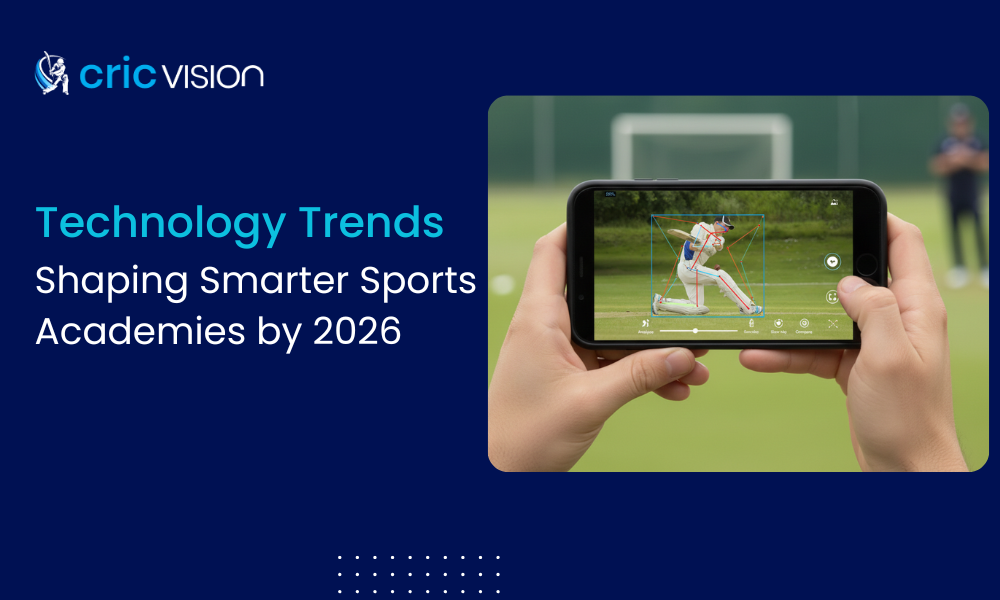
The biggest technology trends in sports academies in 2027 are AI video analysis, workload and wearable tracking, all-in-one academy management platforms, parent-facing apps, data-led player development, AI coaching assistants, digital revenue streams and affordable smartphone-based tools.
This guide explains each trend, what it means for a working academy, and how to adopt it without overspending. Examples lean on cricket, where the shift is moving fast, but the principles apply to any sport.
What these trends have in common
Read past the buzzwords and the pattern is simple. Technology is moving academies from opinion to evidence, from admin to coaching time, and from one-off sessions to an ongoing relationship with players and parents. Each trend below is a different route to the same outcome.
1. AI video analysis goes from elite to everyday
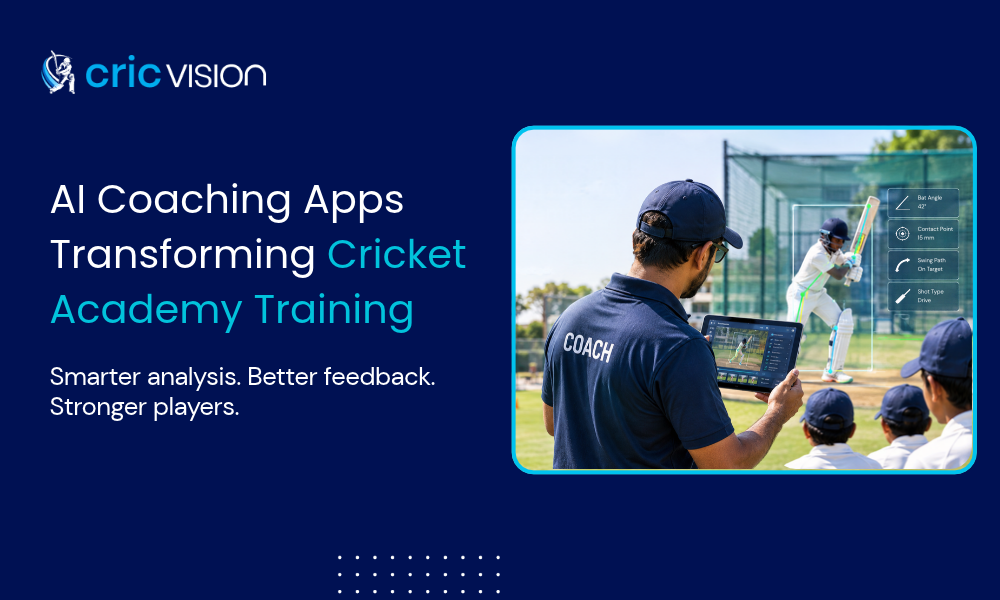
Video has long been part of high-performance coaching. National academies have used camera setups and analysts for years. The shift now is that computer vision can break down footage recorded on a phone, flagging details a coach might miss in a busy session.
In cricket, that means reviewing footwork, timing, shot selection and body posture from net footage. The coach remains the decision-maker; the tool makes sure every player gets looked at.
- Why it matters: objective feedback, faster improvement and a record of progress.
- What to do: pick one skill, such as batting stance or bowling action, use the same camera angle each time and review clips with the player within a day or two.
More on this in how AI is transforming cricket coaching.
2. Wearables and workload monitoring
Tracking training load through heart rate, GPS or simple effort ratings helps coaches balance work and recovery. It matters most where overuse is a risk, such as young fast bowlers in cricket or distance runners in athletics.
- Why it matters: fewer overuse injuries and smarter session planning.
- What to do: start with a free session log of duration and perceived effort. Add wearables only once you know what decisions the data would change.
3. All-in-one academy management platforms
Many academies still run on a patchwork of spreadsheets, paper registers and group chats. The trend is consolidation: one platform for attendance, scheduling, fees, communication and content.
- Why it matters: admin is the quiet growth killer. Every hour spent chasing payments is an hour not spent coaching.
- What to do: list your three most time-consuming admin tasks and look for a tool that handles all of them before adding anything else.
See our comparison of the best scheduling apps for cricket academies.
4. Parent-facing apps and visible progress
Parents now expect to see what their child is working on and how it is going. Branded apps that share schedules, clips and progress updates give families a reason to stay and a clear way to talk about development.
- Why it matters: families that can see progress are more likely to re-enrol and recommend you.
- What to do: share a short clip and one sentence of feedback per player on a regular schedule, in one place instead of scattered chats.
Related reading: why academies lose players and how to keep them.
5. Data-led player development
Academies are moving beyond match scores to long-term player profiles that combine technique, fitness, workload and progress over time. This makes development more consistent across coaches and age groups.
- Why it matters: it shows what is working and where each player needs help.
- What to do: choose a handful of metrics that matter for your sport and review them on a fixed rhythm. Use data to support coaching judgement, never to write off a young player early.
See how this works in practice: turning player progress into a measurable outcome.
6. AI coaching assistants
Chat and voice assistants can answer questions about rules, technique and training, suggest drills and help plan sessions. They are useful for players practising on their own and for coaches who want a quick second opinion.
- Why it matters: players get guidance between sessions, not just during them.
- What to do: treat the assistant as a supplement. Check important technical or safety advice with a qualified coach.
7. Digital revenue streams
Academies are becoming small education and media brands. Recorded courses, video subscriptions, remote coaching and one-to-one bookings let you earn beyond the limits of net slots or court time, and reach players who live too far away to attend.
- Why it matters: physical capacity caps traditional income; digital products do not.
- What to do: record your best drills once, package them into a short course, and test demand with your existing families before investing more.
8. Affordable smartphone-based tools
Ball tracking, speed estimation, automated highlights and shot analysis once required specialist hardware. Phone-based apps, such as Fulltrack AI for ball tracking in cricket, now bring versions of these tools to grassroots budgets.
- Why it matters: the gap between elite and community academies is narrowing.
- What to do: trial one or two tools on a single batch before rolling out. Judge them on whether coaches actually use them every week.
The 8 trends at a glance
| Trend | Problem it solves | Best for | Effort to adopt |
| AI video analysis | Missed technical detail | Any technique-based sport | Low to medium |
| Workload monitoring | Overuse and injury risk | Youth and endurance athletes | Low (log) to high (wearables) |
| All-in-one platforms | Admin overload | Growing academies | Medium |
| Parent-facing apps | Retention and communication | Youth academies | Low |
| Data-led development | Inconsistent progress tracking | Multi-coach academies | Medium |
| AI coaching assistants | Guidance between sessions | Self-directed players | Low |
| Digital revenue | Capacity-limited income | Established academies | Medium |
| Smartphone tools | Cost of specialist hardware | Grassroots academies | Low |
Which trend should you adopt first?
- Drowning in admin? Start with an all-in-one platform.
- Losing players between seasons? Start with parent-facing apps and visible progress.
- Coaches stretched thin? Start with video analysis and AI assistants.
- Revenue flat? Start with digital products.
- Worried about injuries? Start with a simple workload log.
Risks to manage
- Child privacy and safeguarding: get written parental consent before filming, explain how footage is used, restrict who can view it and choose tools that store data securely. Check the rules in your country or region.
- Over-reliance on data: metrics support decisions but do not replace a coach’s judgement of a young player.
- Cost creep: several overlapping subscriptions add up. Review what you actually use every quarter.
- Coach buy-in: tools that add work get ignored. Pick ones that save time within the first month.
What this means for cricket academies
Cricket suits these trends well: technique is repeatable and easy to film, workload matters for fast bowlers, and academies often combine coaching with a strong parent community. For a cricket-specific view, read how technology is changing cricket and our guide to growing a cricket academy with technology.
How CricVision fits in
CricVision is built for cricket and covers several of these trends in one place:
- AI shot analysis of footwork, timing, shot selection and body posture from recorded or uploaded video.
- An AI cricket assistant for questions on rules, strategy and training, by text or voice.
- Coach and player tools, plus academy features for scheduling, progress tracking and parent communication.
- White-label branding and revenue tools for academies that want their own app and digital offers.
To see how it would work for your academy, book a demo.
Frequently asked questions
What are the biggest technology trends in sports academies?
The main trends are AI video analysis, workload and wearable tracking, all-in-one academy management platforms, parent-facing apps, data-led player development, AI coaching assistants, digital revenue streams such as courses and subscriptions, and smartphone-based tools that bring professional-grade analysis to grassroots academies.
How is AI used in sports academies?
AI is mainly used to analyse video of technique, track progress over time, answer coaching questions and automate admin. In cricket, for example, tools can review batting footwork, timing and posture from phone footage. The coach still decides what to work on.
Do small academies need wearables?
Not necessarily. Wearables are most useful where training load is a real injury risk, such as young fast bowlers. A simple session log of duration and effort can deliver much of the same benefit at no cost, so start there and add devices only if the data would change your decisions.
What technology do cricket academies use?
Typical tools include video analysis apps, scheduling and fee-management software, parent communication apps, workload logs and, at higher levels, ball-tracking and wearable devices. Many academies now combine several of these on one platform rather than running separate apps.
Is it safe to film young players?
It can be, with the right safeguards. Get written parental consent, tell families how footage will be used, limit who can view it, choose tools that store data securely, and check the child-protection and data-privacy rules that apply in your country or region.
How much does academy technology cost?
Costs vary widely. Some tools charge per player or per coach each month and some offer free tiers. The useful comparison is total cost against the coaching time saved, the players retained and any new revenue the tool enables.
Final thoughts
Technology will not replace good coaching, but it removes the friction around it: the admin, the missed details and the lack of visible progress. Choose the one trend that solves your most expensive problem, try it on a small group, and expand only when coaches and families are clearly benefiting.
Want to see these trends working in a cricket academy? Book a CricVision demo.