
 Author: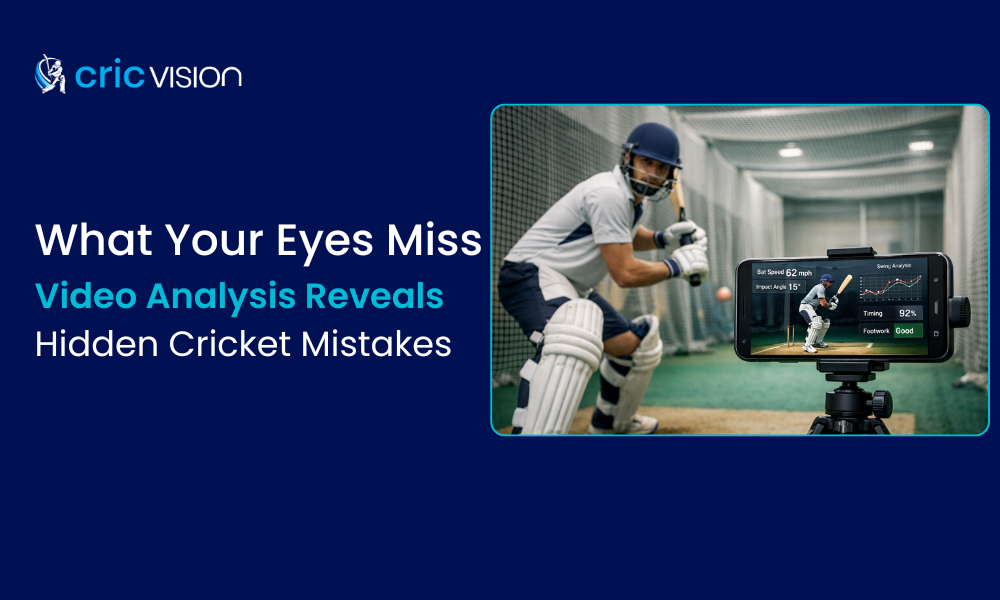
Video analysis can speed up a cricketer’s development, but only when it is done well. The seven most common mistakes are filming from the wrong angle, using poor-quality footage, analysing too many things at once, ignoring match context, copying professionals, reviewing too late, and trusting the tool or the eye without checking.
This guide explains why each mistake matters and how to fix it, with a simple routine and checklist you can use at your next net session. It is written for coaches and players at club, school and academy level.
The 7 mistakes at a glance
| Mistake | What goes wrong | Quick fix |
| 1. Wrong or single camera angle | Problems stay hidden | Film from two angles, same positions every time |
| 2. Poor-quality footage | Blurry, cut-off, hard to review | Higher frame rate, steady camera, good light |
| 3. Fixing too much at once | Player is overwhelmed | One focus per session |
| 4. Ignoring context | Wrong conclusions about technique | Note the ball, shot, intent and conditions |
| 5. Copying a professional | Imitating habits that suit someone else | Compare to your own best and sound fundamentals |
| 6. Reviewing too late | No change in behavior | Review within a day or two, then re-test |
| 7. Trusting the tool or eye blindly | Errors go unchecked | Use both, and sanity-check surprises |
1. Filming from the wrong angle (or only one)
Side-on and front-on views show different things. A single angle can hide a problem that another view makes obvious, and a camera placed too high or too low distorts what you see. Research on bowling actions shows how a standard two-dimensional view can make some movements difficult to judge, which is one reason why multiple angles help.
- Fix: Film each key skill from at least two angles, such as side-on and front-on for batting.
- Fix: Keep the camera level and at a consistent height, with the player’s whole body and bat in frame.
- Fix: Mark camera positions on the ground so every session matches the last.
2. Using poor-quality footage
Fast movements such as a bowler’s delivery or a bat swing blur at low frame rates, and a shaky, badly lit or cropped clip makes frame-by-frame review almost useless.
- Fix: Use 60 frames per second as a sensible minimum, and use slow-motion mode where your phone has it.
- Fix: Use a stable stand instead of holding the phone, and avoid filming into the sun.
- Fix: Check the first clip before the session continues so you do not discover a problem afterwards.
3. Trying to fix everything at once
When the footage reveals ten issues, it is tempting to mention all of them. Players cannot work on ten things, so they usually work on none.
- Fix: Choose one main focus per session, two at most.
- Fix: Give the player one clear cue they can remember at the crease, such as “still head at contact.”
- Fix: Write down the focus, so you can check it next time.
4. Judging technique without context
A shot can look untidy yet be the right response to a ball, and a textbook shot can be the wrong choice. Without knowing the line, length, pace and match situation, you may fix something that was not broken. Net footage and match footage also differ: pressure changes how players move.
- Fix: Note the delivery, the shot played, the intent and the conditions alongside every clip.
- Fix: Compare like with like, such as front-foot drives against similar lengths.
- Fix: Review some match footage as well as net sessions.
5. Copying a professional’s technique
Elite players often have unorthodox habits that work for their bodies after thousands of hours of repetition. Copying the look of a famous shot can mean copying a quirk, not the principle behind it.
- Fix: use professional footage to learn principles such as balance, head position and timing.
- Fix: compare a player with their own best clips and with sound fundamentals, not with an idol.
For more on turning footage into progress, read how to turn player progress into a measurable outcome.
6. Reviewing too late or never closing the loop
Feedback loses power with delay. If a clip is reviewed weeks later, the player barely remembers the shot, and without a follow-up drill and a re-test nothing changes.
- Fix: Review within a day or two of filming.
- Fix: Attach one drill to the fix, then re-film the same skill after one to two weeks.
- Fix: Keep a clip library for each player so progress is visible side by side.
7. Trusting the tool (or the eye) without checking
The coach’s eye cannot freeze a frame at the moment of contact, and AI can misread unclear footage or unusual situations. Each has blind spots.
- Fix: Use both. Let AI flag patterns quickly and let the coach decide what matters for this player.
- Fix: If an AI result looks wrong, check it against the clip before acting.
- Fix: Keep camera setup and conditions consistent, so changes in results reflect the player and not the footage.
See how AI fits into coaching in how AI is transforming cricket coaching.
A simple 5-step video analysis routine
- Set up: Fix two camera positions and a frame rate of 60 fps or higher.
- Record: Capture 6 to 10 balls per skill, noting the delivery and shot.
- Review: Watch with the player within a day or two, frame by frame where useful.
- Pick one fix: Agree a single focus and a drill.
- Re-test: Film the same skill again after one to two weeks and compare clips side by side.
Filming young players responsibly
Many cricketers in academies and schools are children. Get written parental consent before filming, explain how footage will be used, limit who can view it, store it securely and follow the child-protection and data-privacy rules that apply where you are.
How CricVision helps avoid these mistakes
CricVision is an AI cricket coaching app built around the routine above:
- AI shot analysis of footwork, timing, shot selection and body posture from recorded or uploaded video.
- Multi-clip analysis, so you can select and compare several clips together, which supports fixes 5 and 6.
- A reference video library and an AI cricket assistant for questions on technique and training.
- Coach tools for tracking players over time, so progress does not depend on memory.
To see it working on your own footage, book a demo.
Frequently asked questions
What is video analysis in cricket?
Video analysis in cricket means recording players in the nets or in matches and reviewing the footage, often frame by frame, to improve technique, decision-making and consistency. Modern tools can also use AI to flag details such as footwork, timing and body posture.
What camera angles are best for cricket video analysis?
Use at least two angles for each skill. For batting, side-on and front-on views show different things. For bowling, add a view from behind the bowler’s arm path. Keep the camera level, steady and in the same position each session so clips can be compared fairly.
What frame rate should I use to film cricket?
Use 60 frames per second as a sensible minimum, and a slow-motion mode where your phone offers one. Fast actions such as a bowler’s delivery or a bat swing blur at low frame rates, which makes frame-by-frame review less useful.
Can AI replace a coach in cricket video analysis?
No. AI is quick and consistent at spotting patterns, but a coach understands the player, the match situation and what is realistic to change. The best results come from using both and checking unexpected AI results against the clip.
How often should players review video?
Review within a day or two of filming, work on one fix, then re-film the same skill after one to two weeks and compare. Reviewing every session without a plan tends to overwhelm players.
Do I need expensive equipment for video analysis?
No. A modern smartphone, a stable stand and a consistent camera position are enough to start. Better equipment helps at higher levels, but the mistakes in this guide matter more than the gear.
Final thoughts
Good video analysis is less about technology and more about habits: consistent filming, one focus at a time, honest context and a loop that ends in a re-test. Fix the habits first and any tool, AI or otherwise, becomes far more useful.
For more on how academies are using technology, read sports academy technology trends and how to grow a cricket academy with technology.
Ready to try it? Book a CricVision demo.